
Una evolución basada en la investigación, no en el marketing
Cada versión de nuestros instrumentos representa un descubrimiento. No nace porque llegue el momento de lanzar un modelo nuevo. Ni porque la anterior haya dejado de ser buena.
Nace únicamente cuando la investigación nos demuestra que existe una nueva forma de hacer sonar el acero.
Todo comenzó hace casi veinte años, cuando Jonathan empezó a investigar cómo fabricar sus primeros Tank Drum. En aquella época apenas existía información, así que el único camino posible fue experimentar, equivocarse, volver a empezar y escuchar atentamente cada cambio.
Con el tiempo, esa investigación continuó en el mundo del Handpan y del Steel Tongue Drum.
No buscábamos copiar ninguno de ellos.
Buscábamos comprender qué hacía especial a cada uno.
De esa búsqueda nació una idea que terminaría marcando toda nuestra forma de construir instrumentos:
Fusionar la calidez, el sustain y la vibración profunda del Tank Drum con la riqueza armónica, la expresividad y la respuesta dinámica del Handpan, desarrollándolo todo a través de un camino completamente propio dentro del Steel Tongue Drum.
Ese proceso nunca fue lineal. Hubo pruebas, errores, cambios de forma, descubrimientos inesperados y muchas decisiones difíciles.
Cada paso nos enseñaba algo nuevo sobre cómo evoluciona un instrumento cuando realmente se escucha.
Y justo cuando empezábamos a sentir que todo empezaba a encajar…
Nuestra primera nota fue copiada.
En aquel momento todavía no existía ningún registro ni protección sobre aquel desarrollo. Aquello nos obligó a tomar una decisión. Podíamos quedarnos donde estábamos… O volver a empezar desde cero.
Elegimos volver a empezar.
Rediseñamos completamente el instrumento, desarrollamos una nueva geometría y protegimos legalmente aquella nueva creación mediante su correspondiente registro y patente.
Lo que en aquel momento parecía un golpe muy duro terminó convirtiéndose en una oportunidad para crear algo todavía mejor.
That's how born. Arcturus.
No solo como un instrumento.
Sino como una nueva forma de entender su construcción. Su forma tampoco fue casualidad.
La nota central dibuja una «A» y, cuando la observas con atención, aparecen unas líneas que recuerdan a la cabeza de un gran felino, muy similar a la pantera de nuestro logotipo.
Aunque, curiosamente, hay quien siempre dice que ve un lobo.
Y eso siempre nos hace sonreír, porque a Nerea, desde mucho antes de que existiera ParPer Drum, muchos amigos ya la llamaban «Madre Loba».
A veces la vida también deja pequeños guiños escondidos dentro de los propios instrumentos.
Y, a partir de ese momento, comenzó una evolución que continúa hasta hoy. Cada nueva versión no sustituyó a la anterior.
Simplemente añadió una nueva capa de investigación, afinación y posibilidades sonoras.
¿Qué cambia realmente entre una versión y otra?
Cuando hablamos de versiones, muchas personas piensan que la diferencia está en el número de notas, el aspecto exterior o incluso en el tamaño del instrumento.
En realidad, la mayor diferencia está donde no se ve.
Está en la forma de afinar cada nota. Cada nota de un instrumento no es únicamente una frecuencia o un tono.
Dentro de ella conviven diferentes vibraciones que trabajan juntas para construir el sonido que finalmente escuchamos.
Cuanto mayor es la complejidad de esa afinación, mayor es también el tiempo de fabricación, la precisión necesaria y la cantidad de ajustes que requiere cada instrumento.
No buscamos que un instrumento suene más fuerte. Buscamos que cada nota tenga la personalidad que queremos conseguir para esa versión.
Por eso nuestras versiones no representan una escala de calidad. Representan distintos niveles de complejidad de afinación y diferentes formas de experimentar el sonido.
Hay personas que disfrutan de una respuesta más directa y sencilla y otras buscan la máxima riqueza armónica posible.
Y ambas opciones son igualmente válidas. La mejor versión nunca será la más avanzada. Será la que mejor se adapte a ti.
Para hacerse una idea de la diferencia, un Arcturus V3 o V4 de 9 tonos requiere afinar un total de 45 notas diferentes.
En un Arcturus V2 de 9 tonos hablamos de 21 notas a afinar.
Y en un Arcturus V1 de 9 tonos, de 16 notas en total.
Por eso fabricar un V3 no consiste simplemente en añadir más armónicos. Consiste en mantener el equilibrio entre 45 tonos distintos para que el instrumento responda como un único conjunto.
Cada uno requiere una forma distinta de trabajar el acero, un tiempo diferente de afinación y una experiencia sonora propia.
La evolución de Arcturus
Arcturus V1
Afinación
✔ Todas las notas afinadas en su frecuencia fundamental.
✔ Entre una y tres notas incorporan un armónico adicional.
✔ El Ding (nota central) incorpora dobles armónicos cruzados.
✔ Diámetro de 33 cm.
✔ Orden de tonos igual que el Handpan.
¿Qué ofrece?
Una respuesta muy limpia, directa y equilibrada.
Ideal para quienes buscan sencillez, facilidad de interpretación y un instrumento muy intuitivo sin renunciar a la calidad artesanal.
Arcturus V2
Afinación
✔ Todas las notas afinadas en su frecuencia fundamental.
✔ Todas las notas incorporan un armónico.
✔ El Ding mantiene los dobles armónicos cruzados.
✔ Diámetro de 33 cm.
✔ Orden de tonos igual que el Handpan.
¿Qué ofrece?
Una riqueza armónica superior a la V1.
Cada nota desarrolla una vibración más completa y envolvente, manteniendo una respuesta muy natural y agradable para tocar.
Arcturus V3
Afinación
✔ Todas las notas incorporan dobles armónicos cruzados.
✔ Cada nota está formada por cinco tonos perfectamente equilibrados, aunque el oído perciba principalmente tres.
✔ El Ding mantiene la misma filosofía de afinación.
✔ Diámetro de 33 cm.
✔ Orden de tonos igual que el Handpan.
¿Qué ofrece?
La máxima riqueza armónica desarrollada hasta ahora dentro de la serie Arcturus.
Un instrumento mucho más complejo de fabricar y afinar, pensado para quienes buscan explorar todo el potencial sonoro del instrumento.
Arcturus V4
Afinación
✔ Exactamente la misma afinación que Arcturus V3.
✔ Dobles armónicos cruzados en todas las notas.
✔ Diámetro de 45 cm.
✔ Orden de tonos igual que el Handpan.
¿Qué ofrece?
El mayor diámetro modifica la respuesta física del acero, aportando una resonancia más amplia, un sustain superior y una sensación todavía más envolvente.
No sustituye a la V3. Simplemente ofrece otra experiencia.
Elegir una versión no consiste en escoger la más avanzada. Consiste en encontrar la afinación y la respuesta sonora que mejor encajan con tu forma de tocar, con el uso que le vas a dar y con lo que esperas sentir cada vez que el instrumento empiece a vibrar.
¿Entonces por qué seguimos fabricando todas las versiones?
Si una versión incorpora nuevos avances… Es normal preguntarse por qué seguimos fabricando las anteriores.
La respuesta es muy sencilla. Porque ninguna ha dejado de tener sentido ni pierde calidad.
Hay personas que buscan una afinación más directa y sencilla. Otras prefieren una mayor riqueza armónica. Y hay terapeutas que encuentran en un V3 exactamente lo que necesitan para su trabajo diario.
Y hay músicos que disfrutan especialmente de la respuesta más limpia y natural de un V1.
Incluso un niño que empieza a tocar puede aprender perfectamente con un V3 o con un V1.
No existe una elección correcta para todo el mundo.
Cada versión ofrece unas cualidades diferentes, y cada persona conecta con ellas de una manera distinta.
Por eso seguimos fabricándolas todas. Porque creemos que la evolución no consiste en reemplazar lo anterior.
Consiste en ampliar las posibilidades para que cada persona encuentre el instrumento que realmente necesita.
¿Y la serie Cosmos?
Hasta ahora hemos hablado de las diferentes versiones de Arcturus, pero muchas personas también nos preguntan cuál es la diferencia entre Arcturus y Cosmos.
Aunque ambas series comparten la misma filosofía de investigación, fabricación artesanal y evolución por versiones, cada una ha sido diseñada con una personalidad muy diferente.
No son dos instrumentos mejores o peores entre sí.
Simplemente hablan un lenguaje distinto.
Arcturus
La expresividad inspirada en el Handpan
Arcturus nace buscando una interpretación más melódica.
La distribución de sus notas está inspirada en la disposición de un Handpan, permitiendo que las manos se desplacen de una forma muy natural entre unas notas y otras.
Además, incorpora una nota central (Ding), que actúa como eje del instrumento y aporta una referencia muy cómoda tanto para el ritmo como para la melodía.
Esta disposición favorece la improvisación, el desarrollo de frases musicales y una forma de tocar muy expresiva.
Por eso suele ser la serie preferida por quienes buscan crear melodías, desarrollar composiciones o disfrutar de una interpretación más cercana al mundo del Handpan.
Cosmos
El ritmo convertido en instrumento
Cosmos nace con una filosofía completamente diferente. En lugar de organizar las notas alrededor de una nota central, estas se distribuyen en forma de estrella.
No existe un Ding.
Todas las notas tienen el mismo protagonismo.
Esta disposición cambia completamente la forma de tocar el instrumento.
Los movimientos resultan muy intuitivos, favorecen la creación de patrones rítmicos y permiten encontrar las notas con mucha facilidad.
Por eso solemos decir que, mientras Arcturus invita a desarrollar melodías, Cosmos invita a jugar con el ritmo.
No significa que uno no pueda hacer melodías o que el otro no permita crear ritmos.
Ambos pueden hacerlo.
La diferencia está en cuál de esos dos caminos aparece de forma más natural desde el primer momento.
Dos filosofías. Una misma investigación.
Aunque la experiencia al tocar cambia, la esencia sigue siendo exactamente la misma.
Las dos series nacen de la misma investigación y evolucionan siguiendo el mismo criterio.
Por eso Cosmos también cuenta con sus propias versiones V1, V2 y V3, incorporando la misma evolución en la afinación y en la riqueza armónica que hemos desarrollado en Arcturus.
No diseñamos una serie para sustituir a la otra.
Las diseñamos para que cada persona encuentre la forma de tocar con la que más conecte.
Ninguna elección es más acertada que la otra.
Simplemente son dos caminos distintos hacia un mismo destino: disfrutar del sonido.
Comparativa rápida
| Característica | Arcturus | Cosmos |
|---|---|---|
| Filosofía | Más melódica | Más percusiva |
| Distribución de las notas | Inspirada en el Handpan | Distribución en forma de estrella |
| Nota central (Ding) | Sí | No |
| Sensación al tocar | Muy fluida para melodías e improvisación | Muy intuitiva para ritmos y patrones |
| Evolución | V1, V2, V3 y V4 | V1, V2 y V3 |
| Tamaños | 33 cm (V1, V2 y V3) y 45 cm (V4) | 22 cm (V1) y 33 cm (V2 y V3) |
| Personalización | Sí | Sí |
Si Arcturus canta, Cosmos baila. Uno invita a construir melodías; el otro convierte el ritmo en el protagonista. Ambos nacen de la misma investigación y ambos comparten exactamente la misma pasión por el sonido.
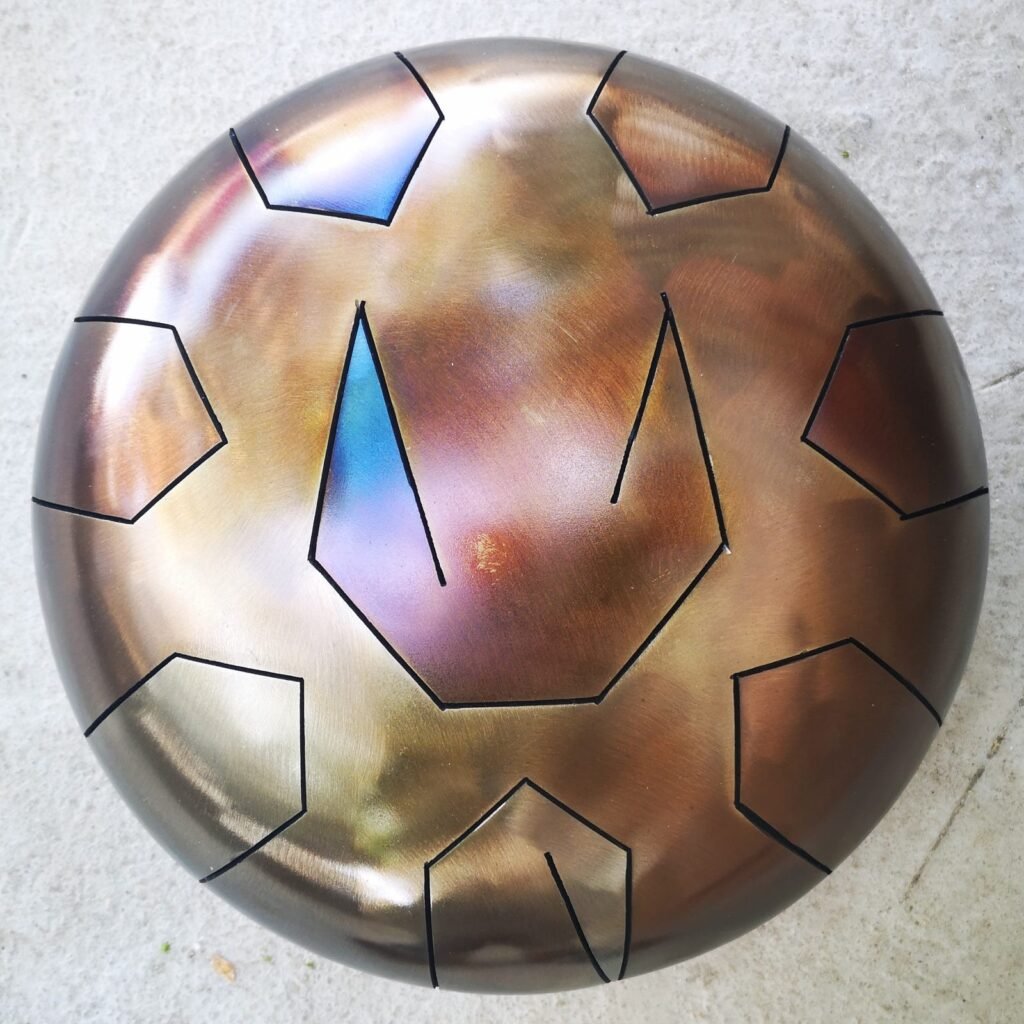
Arcturus Versión 1 steel tongue tank drum handpan hang drum artesano españa 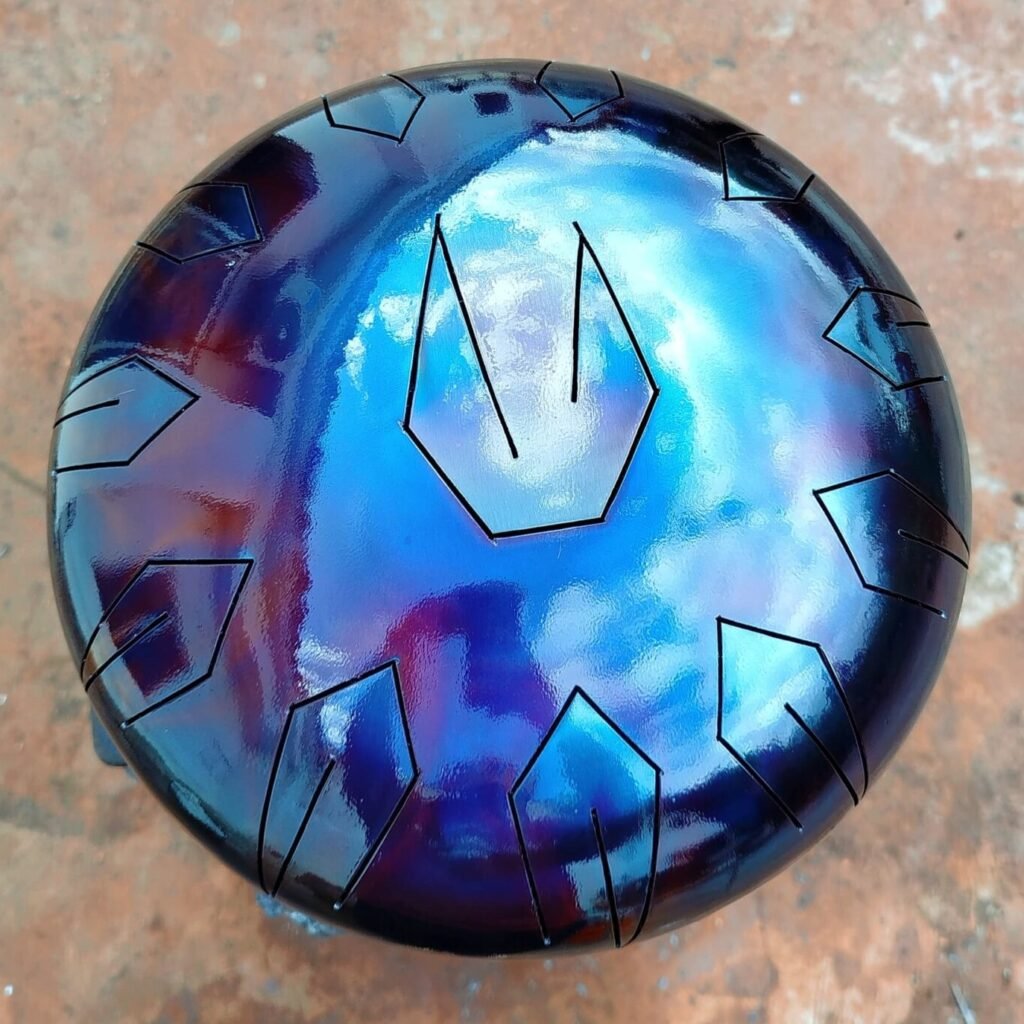
Arcturus Versión 2 steel tongue tank drum handpan hang drum artesano españa 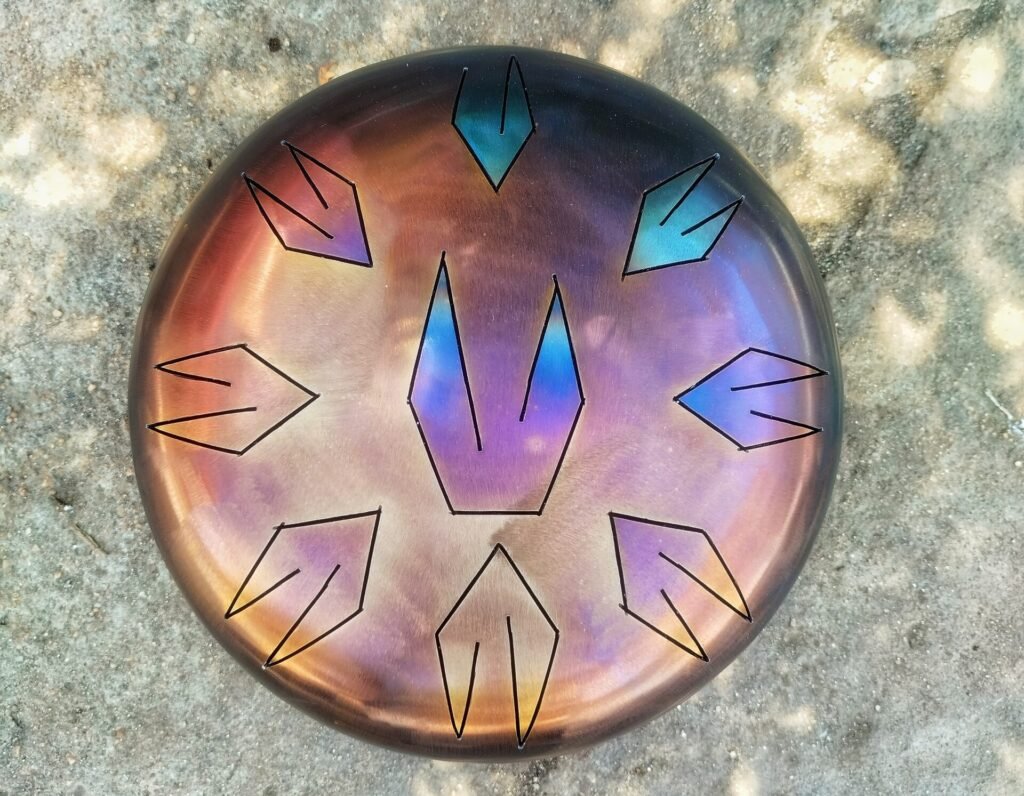
Arcturus V3 steel tongue tank drum handpan hang drum artesano españa 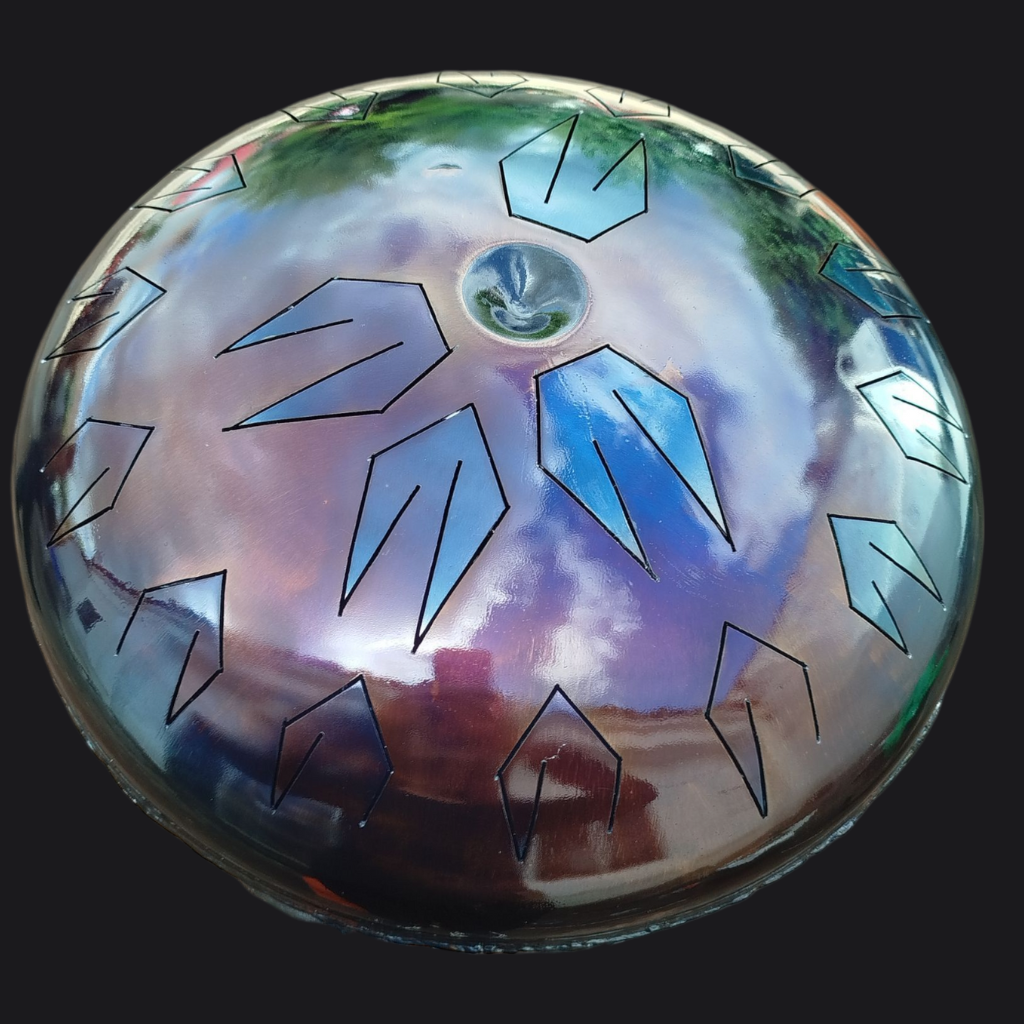
Arcturus V4 steel tongue tank drum handpan hang drum artesano españa 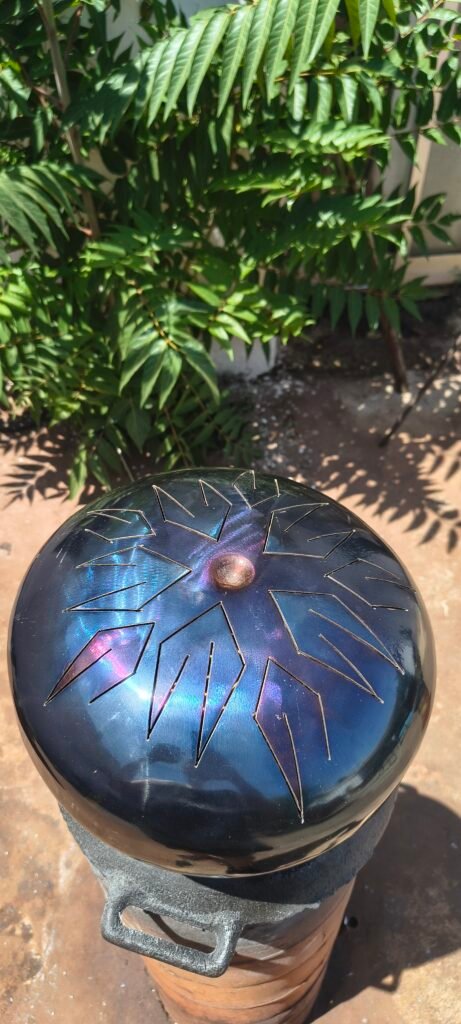
Comos V3 steel tongue tank drum handpan hang drum artesano españa 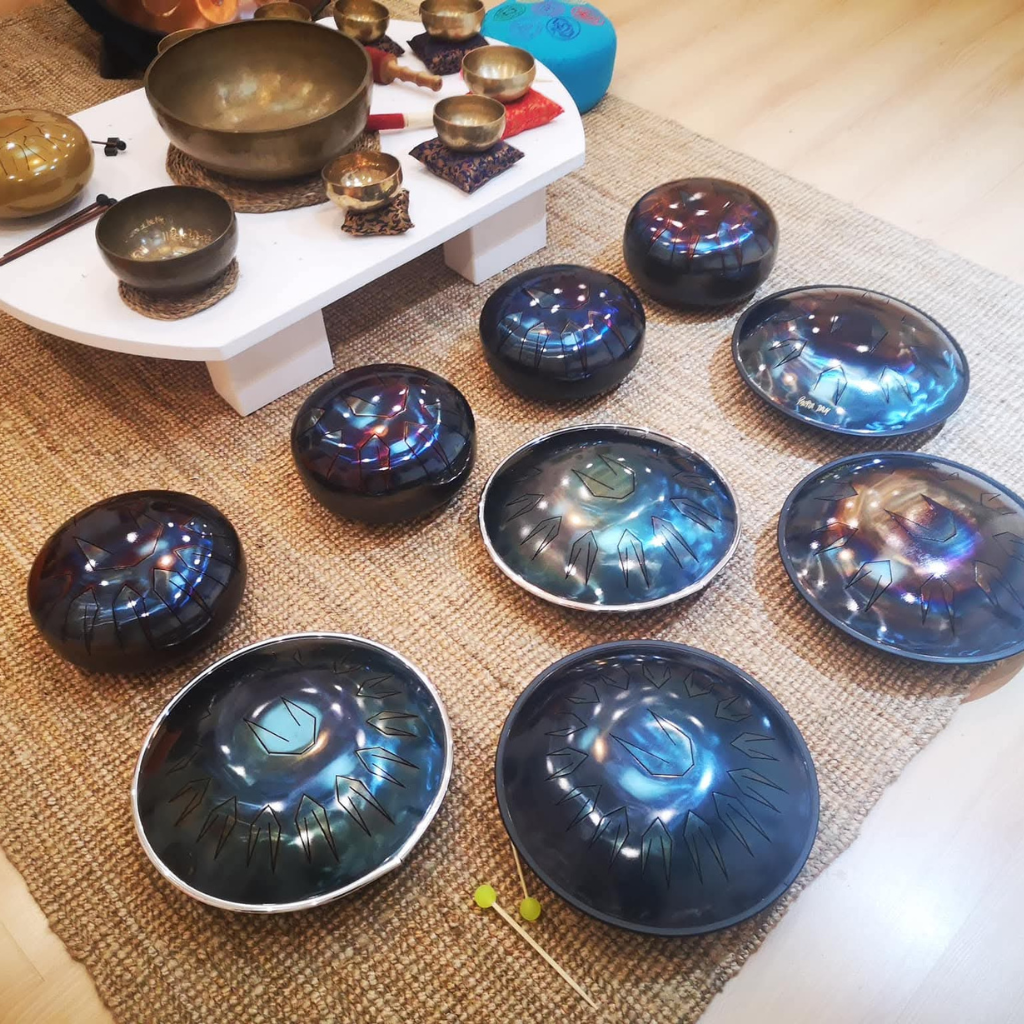
Arcturus, Gaia que nos sirvió de guía, steel tongue tank drum handpan hang drum artesano españa
N